
Title: Writing a Ten-Minute Play
Essential Question: What is a ten-minute play?
State standards used in the lesson:
Write narratives to develop real or imagined experiences or events using effective technique, well-chosen details, and well-structured event sequences.
CCSS.ELA-LITERACY.W.11-12.3.A
Engage and orient the reader by setting out a problem, situation, or observation and its significance, establishing one or multiple point(s) of view, and introducing a narrator and/or characters; create a smooth progression of experiences or events.
CCSS.ELA-LITERACY.W.11-12.3.B
Use narrative techniques, such as dialogue, pacing, description, reflection, and multiple plot lines, to develop experiences, events, and/or characters.
CCSS.ELA-LITERACY.W.11-12.3.C
Use a variety of techniques to sequence events so that they build on one another to create a coherent whole and build toward a particular tone and outcome (e.g., a sense of mystery, suspense, growth, or resolution).
CCSS.ELA-LITERACY.W.11-12.3.D
Use precise words and phrases, telling details, and sensory language to convey a vivid picture of the experiences, events, setting, and/or characters.
CCSS.ELA-LITERACY.W.11-12.3.E
Provide a conclusion that follows from and reflects on what is experienced, observed, or resolved over the course of the narrative.
Lesson objectives: The goal of Writing a Ten-Minute Play is to motivate young people to learn about theatre, construction of a narrative and the difference between prose writing and dramatic writing through the experience of writing an original play. This project inspires creativity by giving each student a voice in creating their own Ten-Minute Play.
Materials and resources: Students will write in class and so need to come with or be provided pencils/pens and sheets of paper. Instructor will provide various handouts needing to be copied and handed out to students.
Focus of lesson: For students to write their own ten-minute play. Each class session will provide students with at least 10 minutes of uninterrupted writing time. Each class session will focus on various elements of construction and understanding the form and format of writing a short play for the theatre. Each class students will write, discuss and participate in activities to stimulate and guide them as they write their play. The last class session will have students read aloud their work as playwrights do in real-life playwriting workshops.
Lesson #1 questions: How theatre is different from film? How is writing for the stage different that writing for TV or Film?
Discussion: Have you ever been part of a crowd that behaved in ways that surprised you?
Discussion focus: Power and importance of live audience as compared to film and TV.
Main activity: Students draw from a hat three different characters and a specific element. These are characters and setting that will make up the 10-minute play they work on over course of workshop.
Lesson #2: HOW A PLAY WORKS
Lesson #2 question: What makes a play have an impact on the audience?
Discussion: What is your favorite TV show or film? What makes it your favorite? What TV show or film would you say is not good? Why?
Discussion focus: Discover what students respond to in dramatic construction to guide them in their own creations.
Main activity:
Your Ten-Minute Play Treatment
Define a treatment created specifically for a play
∙ A treatment is a written summary or outline of the play and includes:
∙ The inspiration for the story
∙The main conflict
∙The connection between the characters, the inspiration, and the conflict
∙ A summary of the introduction, inciting incident, rising action, climax, falling action and resolution
∙ Who is the protagonist and what is their main objective?
∙ Who is the antagonist and what is their main objective?
∙ Where is the play set? A Ten-Minute Play should be set in a maximum of one or two locations
Lesson #3: REALISM, SETTING, TIME
Lesson #3 question: How does realism, time and setting function in a play?
Discussion: What is realism? How does time work in a play? What setting works in a play?
Discussion focus: Discover how realism as a style is defined in theatre. Discover whether it matters or not if a play is like real life. Discover how theatre forces writers to manage time and use their imagination when it comes to the setting for the play.
Main activity: Pass the Story
An improvisation exercise to create and “rehearse” the parts of a story
∙ Seat students in a circle, as tightly as possible
∙ One student begins the story with an opening sentence
∙ Moving clockwise, every student contributes just one sentence to the story
∙ Note: students should create an inciting incident, rising action, climax, falling action and a resolution
∙ Note: Before starting, suggest creating a maximum of two to three characters, including a protagonist and an antagonist
∙ The students should create as much conflict as possible
∙ If the class is large, the story should end after one revolution of the circle. In a small class, set the number of rotations as two, three, or four
∙ At first, side coaching may be necessary to keep the story on track, and to complete a full story by the end of the circle
∙ Students not currently speaking should not side coach nor try to influence the direction of the story
∙ Repeat the exercise several times, starting with a different student each time and telling a completely new story
Lesson #4: THEATRICAL GENRES ARE YOUR FRIEND
Lesson #4 question: What are the different theatrical genres?
Discussion: Name all the different genres you know in novels. Name all the different genres you know in film and TV.
Discussion focus: What are the conventions with specific genres such as comedy? What do audiences expect when they see a mystery? What do they expect when they see a work of science fiction?
Main activity: Read aloud a standard, short fairy tale. Break the students up into groups and have the different groups write the fairy tale as a western or a murder mystery or as a farce.
Lesson #5: THE PRACTICAL PLAYWRIGHT
Lesson #5 questions: What is the real world like for living playwrights? What do I do if I want to be a full-time playwright? What is the marketplace for new plays?
Discussion: What is the difference between being an amateur and being a professional writer?
Discussion focus: The marketplace for playwrights and new plays consists of professional, amateur, school-focused and youth theatre.
Main activity: Reading aloud of 10-minute plays written by students with feedback and critique given after the readings.
SPECIFIC EXPERIENCE
In the last four years, I have applied and was accepted to present workshops to state thespian festivals in Virginia, Arkansas and Texas. Hundreds of high school students sat in my workshops on Playwriting, Stage Adaptations of Fairy Tales and Play Analysis for the Director and Actor. I taught eight workshops over a weekend at the Texas Thespian Festival, one of the largest annual thespian conferences in the country. The residency proposal I am making is an expansion of the workshops I taught at the thespian festivals. My experience working with students there included offering guidance on what they were writing in my workshops and then feedback as they presented their plays. The Introduction to Scriptwriting class I taught for several years at University of Arkansas – Pulaski Technical College utilized the same approach and techniques I will employ in the Arts Residency. I have also worked with students at UALR in developing plays presented in a capstone project.
ARTIST ROSTER SUMMARY
Werner Trieschmann offers a residency in Writing a Ten-Minute Play, a writing workshop environment where students are taught by a professionally produced playwright with plays produced around the country and the around the world. Each class session will provide students with at least 10 minutes of uninterrupted writing time. Each class session will focus on various elements of construction and understanding the form and format of writing a short play for the theatre. Each class students will write, discuss and participate in activities designed to stimulate and guide them as they write their play. The last class session will have students read aloud their work and receive instant feedback as playwrights do in real-life playwriting workshops.
Background
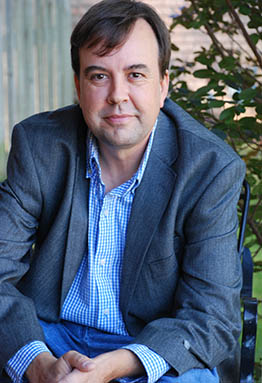
Werner Trieschmann is a published and produced playwright, a director and theatre instructor. His 20 published plays have been produced across the United States and many other countries including Australia, Canada, India, Italy, Japan, New Zealand, Romania, South Korea, and the United Kingdom. His play, Disfarmer, was produced by Arkansas Repertory Theatre for the inaugural ACANSA Festival. Trieschmann’s play All I Really Need to Know I Learned by Being in a Bad Play is a bestseller with Dramatic Publishing. He was writer and director for the world premiere production of Mozart: Revealed and Schubert: Revealed with the Fort Wayne Philharmonic in Fort Wayne, Indiana. As an instructor, Trieschmann has held popular playwriting workshops at state thespian festivals in Arkansas, Virginia and Texas, which one of the largest festival in the country attended by thousands of students. A native of Hot Springs, Trieschmann earned an MFA in playwriting from Boston University and has taught theatre, film and creative writing at UA-Pulaski Technical College, UALR, UCA and Hendrix College. He lives in Little Rock with his wife and two sons.
- Preferred Age Level
- Middle School-High School
- Geographic Availability
- Statewide
- Specialty
- General: Literature - Playwriting