This is part of a series of articles written by the Department of Arkansas Heritage to celebrate the Semiquincentennial of the United States. While Arkansas was not yet a territory or a state in 1776, the region that would become the state of Arkansas in 1836 played an important part in the evolution of the United States over the past 250 years.
To understand Arkansas’ evolution from being a territory to becoming the 25th state, it’s imperative to look back to the history of the United States in the early 1800s.
In 1803, the United States purchased 828,000 squares miles of land for the sum of $15 million (approximately $429 million in 2025) from France. Emissaries of President Thomas Jefferson brokered the deal, giving the United States not just the land, but also the Mississippi River and New Orleans. Ultimately, the purchase doubled the size of the country.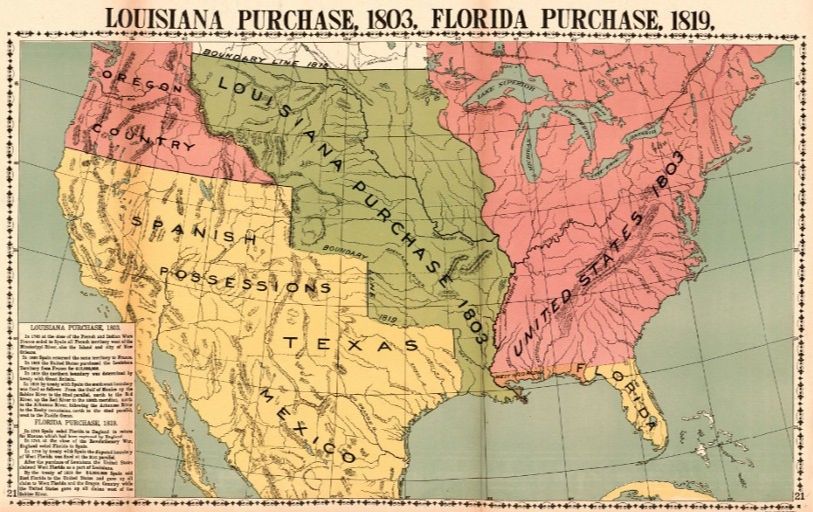
As part of the purchase, Arkansas first became part of the District of Louisiana, then later became part of the Territory of Missouri in 1812 until Missouri petitioned for statehood in 1819. On March 2, 1819, Arkansas officially became its own territory with five counties already established. Lawrence County was one of those five counties, and it was the largest of the five.
Known as the Mother of Counties, Lawrence County was established on January 15, 1815, when Arkansas was still part of the Missouri Territory. The county originally encompassed more than 21,000 square miles (over 13 million acres). Today, that same area comprises 25 counties in Arkansas and 17 counties in Missouri.
Originally inhabited by Native Americans, including the Osage, pioneers made their way west as territories were established, purchasing land near the Black, Current and Spring rivers.One of the earliest settlements in northern Arkansas was Davidsonville. Originally named Lawrence, it was founded in 1815. Davidsonville was designated the first postal stop in the county in 1817 and became the site of the county’s first courthouse in 1822.
.jpg?sfvrsn=f43f5801_0 "Ghost structure at Davidsonville Historic State Park")
The federal government also made Davidsonville the site of Arkansas Territory’s first land office. The town continued to grow over the next decade, thanks to its prime location along the Black River and easy access to major trade routes. By the 1830s, though, Davidsonville was mostly abandoned, due to disease, relocation of the Southwest Trail and overall decline in the trade routes near the town.
As the population of Arkansas Territory grew, the sheer size of Lawrence County created access problems for citizens.
In 1820, Independence County became the first county to be carved out from a section of Lawrence County and was eventually followed by 24 other counties. By the time Arkansas formally became a state in 1836, it had a total of 50 counties.
Arkansas’ Early History: A Road Trip
I recently took a road trip through the parts of northern Arkansas that Lawrence County originally covered, and my first stop was in Walnut Ridge. The town was incorporated in 1880, although the European settlers began moving to the area in the 1860s. During World War II, the community was chosen for an Army Air Forces Flying School where pilots were trained to fly BT-13s. The Wings of Honor World War II Museum, located on the grounds of the Walnut Ridge Airport, preserves the history of the school and is home of an extensive collection of World War II aircraft nose art.. In September 1964, an airplane also played an important part in Walnut Ridge’s history when the Beatles landed at the airport. It’s the only known town in Arkansas that the quartet visited. Walnut Ridge has embraced its Beatles history. The downtown is home to a life-size sculpture of the Fab Four, and the nearby Guitar Walk is a replica of John Lennon’s Epiphone Casino. The Guitar Walk honors musicians who played along the historic Rock and Roll Highway 67. The historic downtown offers a great variety of shops and restaurants..jpg?sfvrsn=11369188_0 "Guitar Walk, Walnut Ridge")
My next stop was in Pocahontas. Pocahontas is part of Main Street Arkansas’ Downtown Network Program. The downtown features a 17-block National Historic Commercial District with structures dating between the late 1800s and early 1900s, including a beautifully restored 1872 Victorian Italianate courthouse. Futrell Pharmacy is the state’s oldest pharmacy, dating to 1854. The Sanitary Barber Shop, built in 1894, is the state’s oldest barbershop and still has much of its original equipment and fixtures. The Randolph County Heritage Museum, the town’s infamous “meteorite,” and a great variety of shops are also located within the historic downtown.

A trip to the area wouldn’t be complete without a visit to the Dairy King, a 2022 Arkansas Food Hall of Fame inductee. The menu features everything from burgers to catfish to fried pies. On weekends, they also serve breakfast.

Visitors to the area can also visit several Arkansas State Parks (don’t forget your Club 52 passport!), including Davidsonville Historic, Lake Charles and Powhatan Historic. The 33-acre Hall’s Creek Natural Area is located in Randolph County and features a bluff-walled canyon uncommon to the Ozarks. It’s also only known home in Arkansas of the wall-rue spleenwort, a fern that grows on limestone and other rocky bluffs.